
Lights, Camera, Adaption: A Journalist's Journey with Cerebral Visual Impairment
Through My Lens Week 9: Cerebral Visual Impairment Awareness Month

September, to me, means more than autumn fashion, new coffee menus and hoodie season. It is also Cerebral Visual Impairment Awareness Month.
Every six minutes, someone in the UK loses their sight. That’s around 250 people a day.
Seeing differently is a barrier, but it is also an asset, It makes me stronger, gives me a reason to fight for my dreams, and helps me have empathy and compassion.
My sight might not write the headlines of my life, but it will always have a part in it. Some days the lead, some days the and finally story, but it does always have a place in the running order.
The thing I find that people struggle to understand with CVI is, you can’t see it, when you look at me. There are no visual indicators. I don’t have a cane, I don’t have a guide dog, but that’s why I’m doing my bit to raise awareness for my community and to show the parents and young people who are dealing with a similar thing or are newly diagnosed, that this will not define them, even on the days they think that it will. I’ve shed tears over my CVI, sure, but I’ve also been proud of my disability more times than I can count. The bad days are completely valid, but they don’t define you.
I’ve chosen an extremely visual career in journalism, and the irony of that is not lost on me. Studio days can be exhilarating, fun and at times slightly stressful, but they can also be migraine inducing and and mentally draining with all the extra planning involved in solely spending an hour under the spotlight. But, no matter if if the studio is draining, exhilarating or stressful, I always feel happier than I did when I set foot in the studio, and that’s the power of passion. I didn’t choose journalism in spite of my VI, but because passion speaks louder than fear. The studio, it lifts me up, boosts my mood, my confidence. It is enough to make the hard days worth it. The extra planning, to feel that indescribable joy, is so very worth it. The studio gives me a feeling of independence, sitting in front of a camera, script in hand, or radio desk at my fingertips, no one can take that away. That feeling is mine, and one I’ll always cherish.
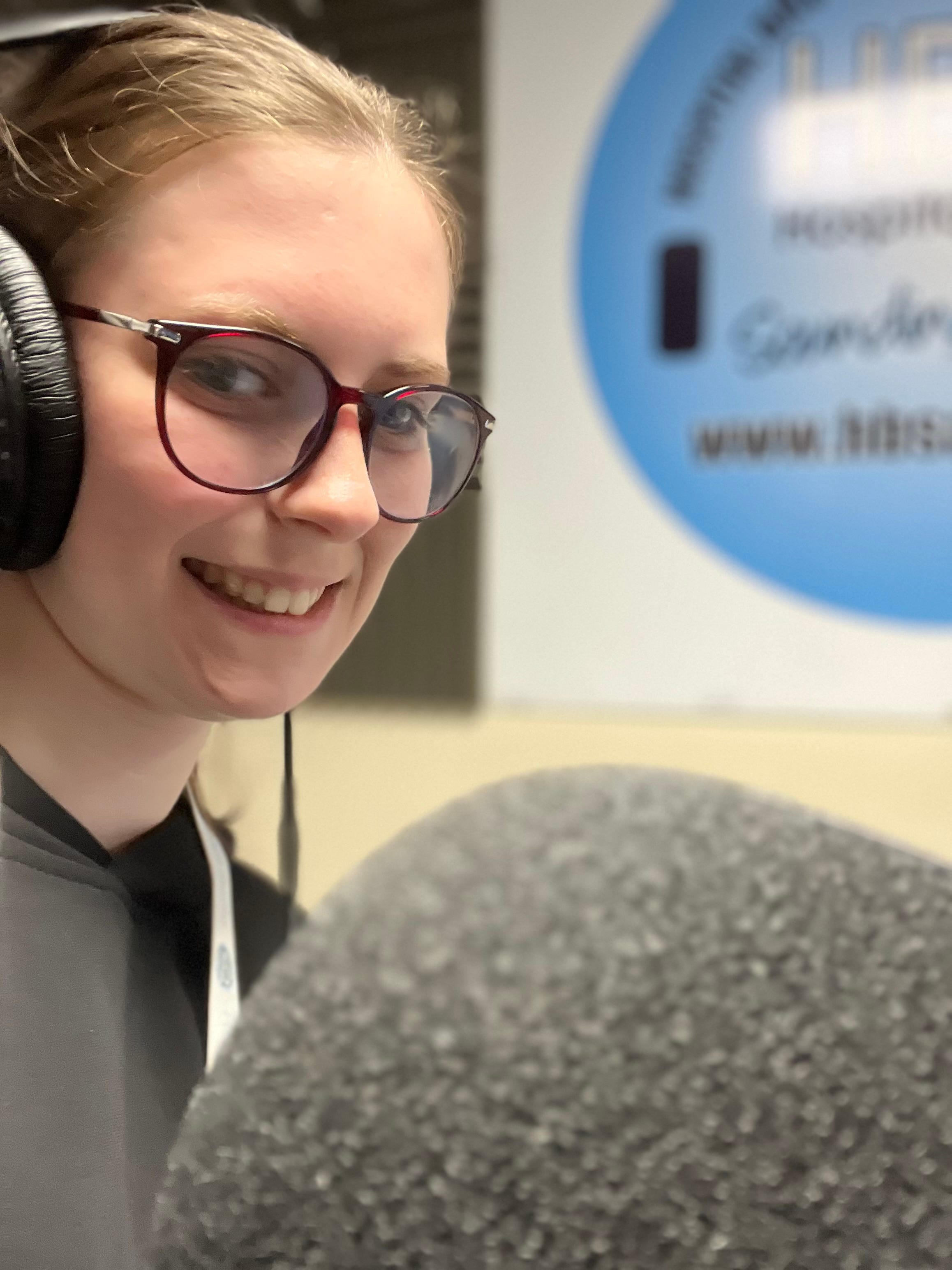
Some days, though, a migraine means that the studio is a no-go zone, and those days are tough. because no matter how many times I say my VI won’t win, those days it does. They don’t happen often, but when they do, they cut deep, and break my heart a little, because they leave me questioning whether the career I so desperately want is for me. But I always go back, because I know the feeling will be waiting for me the second the cameras are in action, the words are on the autocue and the mics are live.
I felt that asking for help made me different or weak, but that’s not what it’s about. I’m maybe seeing differently, yes, but by asking for the help or the adaption, I’m giving myself an equal footing to stand on. Being different feels scary, and staying back to make sure staff understand your support plans, and know how to help you and getting a different answer every time is mentally draining, and at times an emotional process. Explaining yourself over and over is the true weight of living with and around an invisible disability that often goes unseen.
People say “You don’t look visually impaired” as if it has to be visual to be valid. But it doesn’t, because whether I’m in a studio or doing the every day mundane tasks, my CVI follows behind, no matter what. It’s a lifelong condition, and I’m doing the best I can to live around it.
I still do the same things as everyone else, just with an extra planning, and as frustrating as that is sometimes, I know it’s not about being different, it’s about being safe, and feeling like busy environments are manageable because these environments are just a part of life.
Charities like Sight Scotland, RNIB Scotland and Guide Dogs Scotland are great resources to learn more about sight loss and how to support people impacted by it because the number of people living with sight loss set to double to more than 4 million by 2050, sight loss will be much more prevalant in our world and we need to be ready for it.
To the CVI community, I stand with you, and pun intended, I see you. You are worthy. We may be labelled disabled but the truth is, we live in a society that disables us. I’m speaking out about this, and doing my part in raising awareness, because if I don’t, then who will?
A strong and open article once again. Certainly gives me a better insight into the daily challenges facing many, with your undeniable passion for journalism shining through. Keep it up
A beautiful read as always, Eve. I love how you’ve proved that although your CVI is always part of your life, it doesn’t have to be the main focus or a reason not to shoot for the stars!